AI AgentsWhy 95% of AI Agent Pilots Fail in Production (And How to Be in the 5%)MIT's NANDA project tracks the failure rate. The Berkeley/Stanford/IBM MAP study and Cleanlab's survey identify what the 5% does differently. Seven failure modes, seven fixes.6 min read • Mar 31, 2026
AI AgentsWhen Multi-Agent Architecture Is the Wrong AnswerAnthropic's own engineering retrospective lists the cases where multi-agent fails. Here's the contrarian decision rule the AI Overview leaves out.5 min read • Mar 30, 2026
AI AgentsThe Multi-Agent Architecture: When One AI Isn't EnoughAnthropic's published number: a multi-agent system beat single-agent Claude Opus 4 by 90.2% on research tasks — and used 15× more tokens. The economic line where multi-agent earns its seat.7 min read • Mar 29, 2026
AI AgentsObservability and Evaluation for AI Agents in ProductionCleanlab's data: 63% of production teams will invest more in observability next year. The blueprint for what that investment actually buys.6 min read • Mar 29, 2026
AI AgentsHow to Build an AI Agent Without Overengineering ItAnthropic's review of dozens of agent builds found that the successful ones used simple, composable patterns — not frameworks. The build sequence that ships.7 min read • Mar 27, 2026
AI AgentsHow AI Agents Are Deployed in Production: The Infrastructure PictureRedis for state. PostgreSQL for memory. Strict input/output validation. The infrastructure pattern most production AI agent stacks converge on — and why.6 min read • Mar 26, 2026
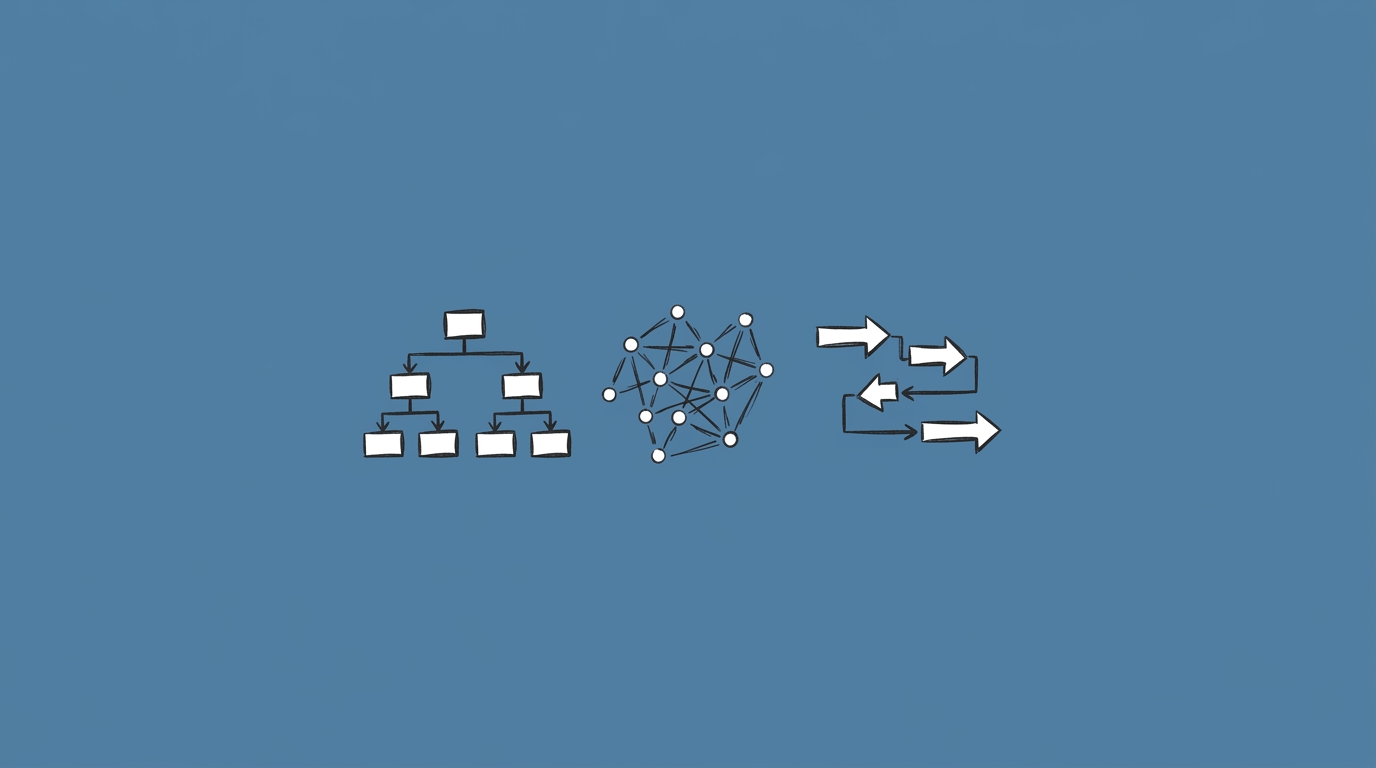
AI AgentsHierarchical, Swarm, Sequential: The Three Multi-Agent Patterns ExplainedThe AI Overview names three multi-agent patterns. Here's what each one looks like in production code, what it costs, and when each one earns its seat.6 min read • Mar 24, 2026
AI AgentsThe 5 Types of AI Agents (And Which One Your Business Probably Needs)The textbook taxonomy of AI agents — simple reflex, model-based, goal-based, utility-based, learning — translated into business buying decisions.6 min read • Mar 23, 2026
AI AgentsEval Sets for AI Agents: How to Know Yours Is Actually WorkingThe discipline that the AI Overview skips. How to build an eval set, how to grade it, and the cadence that catches drift before customers do.7 min read • Mar 17, 2026
AI AgentsHow Agentic AI Actually Works: From Chat to ActionA walk through the four-stage agentic loop (Perceive, Plan, Act, Verify) with per-stage failures and a real single-run cost trace of $0.42.11 min read • Mar 13, 2026
AI AgentsMost Businesses Don't Need AI Agents. Here's When You Actually Do.The contrarian case against AI agents: four anti-patterns that fool teams, and the narrow set of tasks where agents actually earn their complexity.7 min read • Mar 13, 2026
AI AgentsCommunication Between AI Agents: How to Design It Without Causing Cascading FailuresThe AI Overview lists 'communication protocols' as a multi-agent component. The engineering reality is contracts, schemas, and the cascading-failure pattern that kills multi-agent systems.6 min read • Mar 12, 2026
AI AgentsThe Real Cost of Running AI Agents in ProductionToken bills are 10-20% of what AI agents actually cost. Here's the full budget for a mid-complexity production agent, line by line.9 min read • Mar 10, 2026
AI AgentsAI Agents vs Automation vs Chatbots: What's the Actual Difference (and When Each Wins)?AI agents, chatbots, and automations are different patterns with 10x cost differences. Here's how to pick the right one, with real cost math.7 min read • Mar 7, 2026
AI AgentsBuild vs No-Code AI Agents: When Each One Actually WinsThree approaches to building AI agents — pure no-code, low-code, direct API — and the real cost, control, and volume tradeoffs that decide between them.6 min read • Mar 6, 2026
AI AgentsAI Agents for Business: What They Are, What They Cost, and When You Actually Need OneA practical guide to AI agents for business in 2026: plain-language definitions, when to build one, real cost math, and the four-condition test.8 min read • Mar 4, 2026
AI AgentsAI Agents in Production: What They Actually Do (With Examples)MIT, Cleanlab, and a Berkeley/Stanford/IBM study converge on the same picture: production agents are smaller, simpler, and more human-supervised than the marketing suggests.7 min read • Mar 1, 2026