Build to Adapt: Why Your AI System Shouldn't Be Locked to One Model
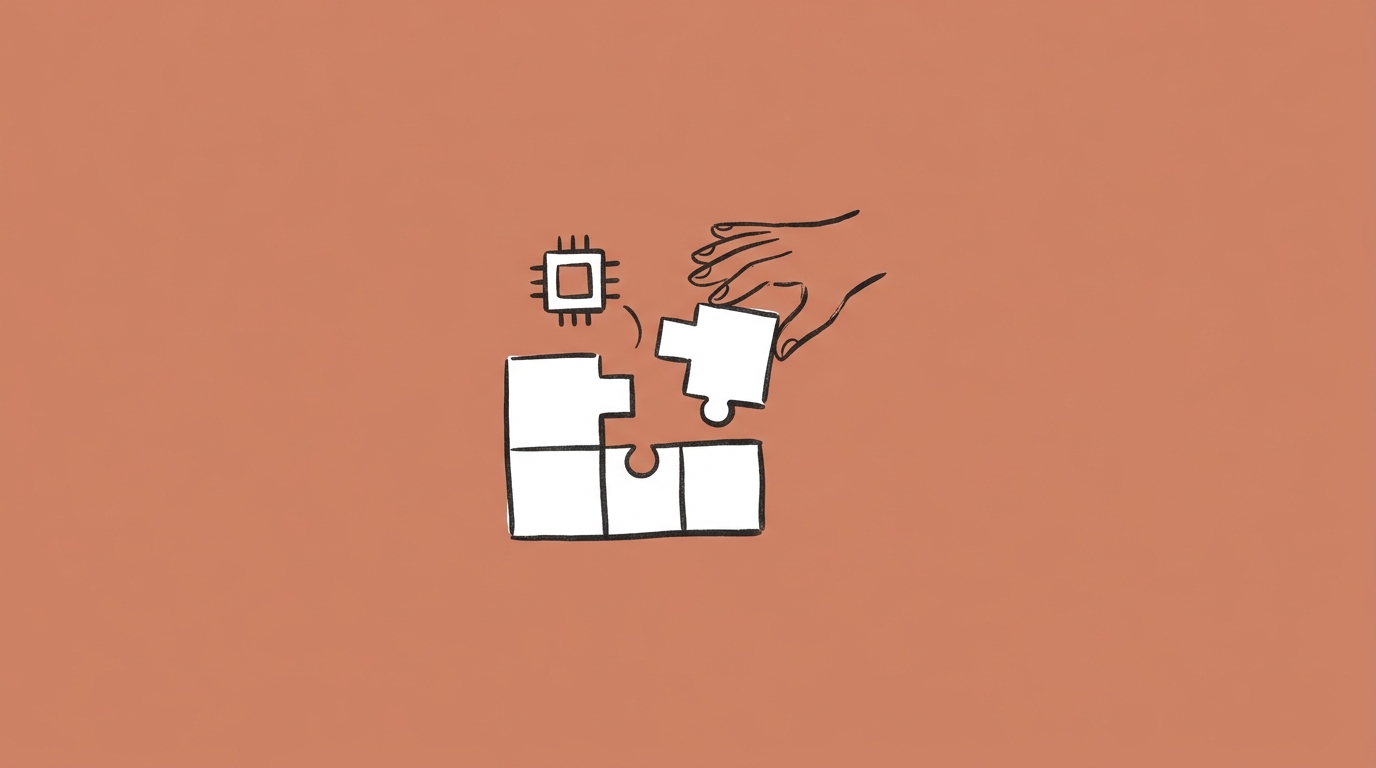
Think about the last time you bought a printer. You got a good deal on the hardware. Then you discovered the ink cartridges only work with that specific model. They cost more than the printer. And when you wanted to switch, you could not, because every cartridge in your drawer only fit the old machine.
That is vendor lock-in. And it is exactly what happens when you build an AI system around a single model from a single provider.
A new AI model arrives every few weeks. Each one is faster, cheaper, or better at something specific than the one before it. OpenAI, Anthropic, and Google DeepMind are all shipping at this pace. If your system is built around a single model, you have a problem. Not today. But soon. Because the model you chose six months ago is no longer the best option for what you need, and switching to the better one means rebuilding everything.
What is the difference between building on a model and building around a model?
Building on a model means the model is the foundation. Building around a model means the model is a replaceable component. The first approach is faster to build. The second is faster to maintain, improve, and cheaper to operate over any period longer than a few months.
When you build on a model, your prompts, data pipelines, output formatting, and error handling are all designed specifically for that model's behavior and quirks. The system works, but it only works with that model.
Here is a concrete example. Say you build a support ticket classifier:
- Built on GPT-4: Your code uses OpenAI's function calling syntax. Your prompt exploits GPT-4's specific formatting tendencies. Your parser expects GPT-4's JSON structure. When you want to try Claude, you rewrite the prompt, the function calls, the parser, and the error handling. Three-week project.
- Built around a model: Your business logic says "classify this ticket into one of 12 categories." An abstraction layer translates that into whatever prompt format the active model needs. The output goes through schema validation. Switching models means changing one configuration line and running your evaluation suite. Thirty-minute task.
The companies doing AI well in 2026 treat models like infrastructure. They pick the cheapest component that clears their requirements. They run evaluations. They downgrade when they can and upgrade when it matters. You can only do that if your system is built to adapt.
Why does model lock-in cost more than most teams realize?
Lock-in does not just cost you when you need to switch. It costs you every day you cannot take advantage of a better option that already exists.
When a better model arrives, and it will, a locked-in system forces you into an ugly choice. Stay with the current model and accept that your system is not as good as it could be. Or rebuild, which means weeks of work, a new round of testing, and the risk of introducing new problems into a system that was already working.
Neither option is good. Both cost time and money.
The hidden cost is opportunity. A model that is twice as fast means your system handles twice the volume. A model that costs half the price means your operating costs drop. A model that is better at your specific task means your output quality improves overnight. But you only capture those benefits if your system can actually use the new model.
I have seen teams picking frontier models for classification tasks and paying 10-20x what they need. That is the single most common waste in AI budgets. A well-designed system would route that classification task to a smaller, cheaper model while reserving the frontier model for tasks that actually require it. One frontier, one mid-tier, one small. Route per task complexity.
Companies on Azure pick GPT by default. Companies on AWS pick Claude. The cloud decides more often than the benchmark. That alone should tell you how arbitrary model selection often is, and why your system should not depend on that arbitrary choice permanently.
How do you design AI systems for flexibility from day one?
Designing for flexibility requires discipline more than skill. The core principle is loose coupling: put a clean interface between your business logic and the AI model so that changing the model does not change everything else.
Manage prompts as templates. Store them separately from your application code. Include variables for model-specific adjustments (system message format, function calling syntax, output instructions). When you switch models, you adjust the template, not the pipeline.
Build model-agnostic data pipelines. Your data preprocessing should produce a standard format that any model can consume. If your pipeline creates OpenAI-specific JSON structures, you have coupled data processing to a vendor. Separate them.
Validate output against a schema. If you need structured JSON with specific fields, validate what comes back regardless of which model produced it. Different models have different habits. Claude returns clean JSON naturally. GPT-4 sometimes wraps it in markdown code blocks. Your validation layer handles both without breaking.
Build an evaluation framework. I keep a set of evaluation examples for every pipeline I build. Real inputs with expected outputs. When I want to test a new model, I run it against those examples. If it passes, I switch with confidence. If it does not, I know exactly where it falls short.
None of this is exotic engineering. It is the same software principles that make any system maintainable: loose coupling, clear interfaces, modular design. Applied to AI, they are the difference between a system that gets better over time and one that gets stuck.
Why is architecture more important than model selection?
The model you pick is the least important decision in an AI project. The architecture is what determines whether your system thrives or stagnates.
A well-architected system with a mediocre model will outperform a poorly-architected system with the best model available. Because the well-architected system can swap in the best model whenever it appears. The poorly-architected system is frozen in time, permanently married to whatever was state of the art on the day it was built.
Most teams overthink model selection. The model is 10-20% of the project. The workflow around it is 80%. I tell every client the same thing: the real competitive advantage in AI is the data you have, the workflow you build, and the evaluation discipline you maintain. Not the model.
I do not hesitate to switch technologies when something better comes along. I spent months building pipelines in n8n, then found that some of those workflows ran better on different tooling. So I moved. No attachment to sunk cost. The tool that works best wins, regardless of how much time I spent on the previous one.
Build systems that are designed to change. Because they will need to.
Frequently Asked Questions
What is the difference between building on a model and building around a model?
Building on a model means the model is the foundation: prompts, parsing, error handling are all designed for one model's behavior. Building around a model means the model is a swappable component: business logic is separated from the AI layer through an abstraction, so switching models means changing a configuration, not rebuilding the system.
How often do AI models get updated?
Major providers like OpenAI, Anthropic, and Google DeepMind release new model versions every few weeks to months. This pace means any system locked to a specific model version will fall behind quickly, missing improvements in speed, cost, and capability.
How do you design an AI system for model flexibility?
Three principles: separate model interaction into its own module behind a clean interface, define expected output formats independently of the model using schema validation, and build an evaluation framework with real test cases so you can compare models objectively before switching.
Sources
- Stanford University HAI — AI Index Report 2025
- McKinsey & Company — The State of AI in 2025

Founder, Tech10
Doreid Haddad is the founder of Tech10. He has spent over a decade designing AI systems, marketing automation, and digital transformation strategies for global enterprise companies. His work focuses on building systems that actually work in production, not just in demos. Based in Rome.
Read more about Doreid