Your AI System Should Survive a Model Update
Think about your phone charger five years ago. You had one cable for your phone, a different one for your tablet, another for your headphones. Every time you upgraded a device, you needed a new cable. Then USB-C arrived. One connector, every device. The old cables became junk drawers. The new ones just worked.
AI systems have the same problem. Most are built like those old chargers: designed for exactly one model, from exactly one provider. When something better arrives, and it always does, you cannot just plug it in. You have to rewire the whole thing.
Why does model lock-in happen so often?
Vendor lock-in happens because building for one specific model is faster in the short term, and teams under deadline pressure take the fastest path. The prompts are tuned for that model's quirks. The output parsing assumes that model's format. The error handling is designed for that model's failure modes. Every layer is coupled to one vendor.
I see this constantly. A team builds their product enrichment pipeline around GPT-4's function calling syntax. Three months later, they want to test Claude because it handles their specific task better and costs less. But switching means rewriting prompts, adjusting parsers, updating error handling, and retesting everything. That is not an upgrade. That is a rebuild.
OpenAI, Anthropic, and Google DeepMind all ship new model versions every three to six months. Older versions get deprecated, sometimes with only a few weeks of notice. If your system is welded to one version, you are on someone else's timeline for forced migrations.
The insight most teams miss: the model is 10-20% of the project. The workflow around it is 80%. Lock-in means rebuilding the 80% every time the 10% changes.
What does a model-agnostic system actually look like?
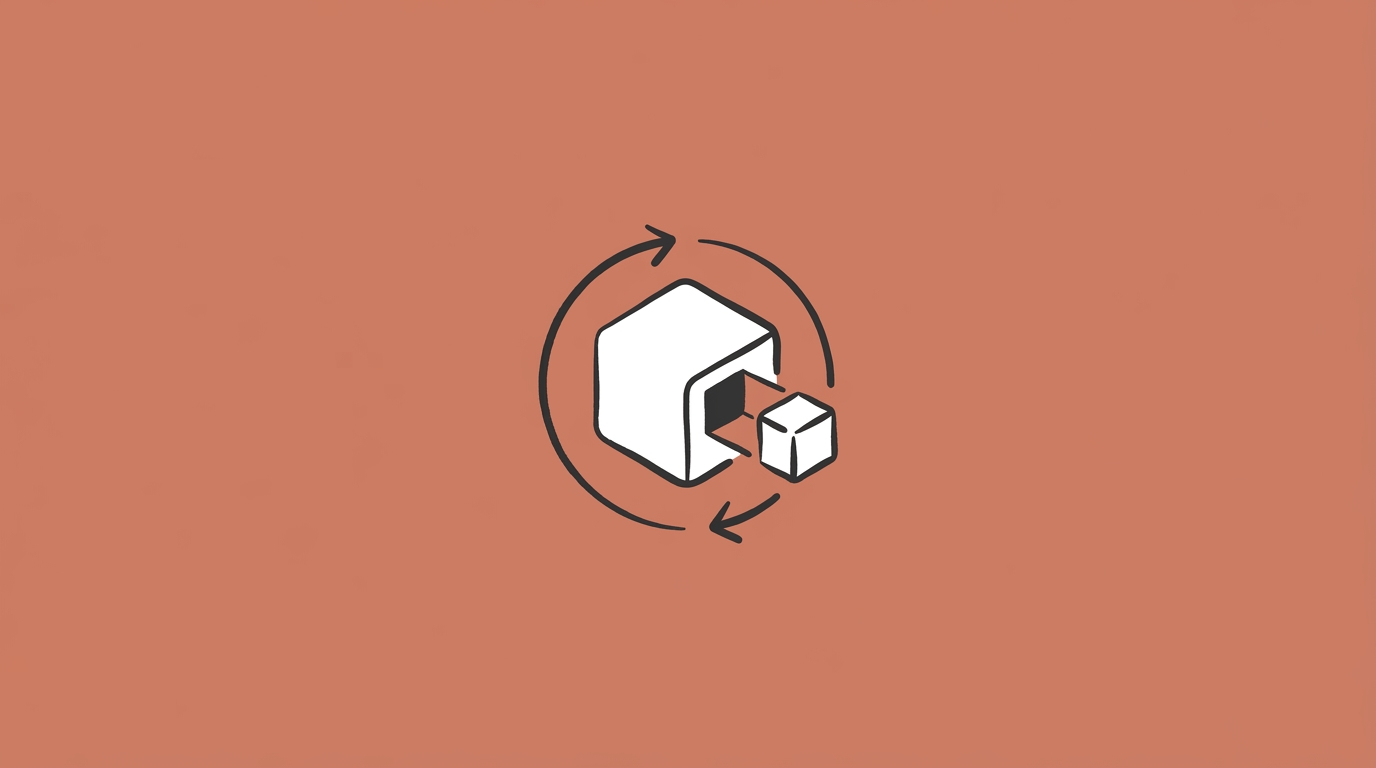
A model-agnostic system separates the intelligence layer from the business logic using an abstraction layer. Think of it like a universal adapter between your business and whichever AI provider makes sense today.
The business logic defines what needs to happen: extract product attributes, classify support tickets, generate descriptions. The intelligence layer is where the model sits. Between them is a translation layer that converts business requirements into model inputs and model outputs into business results.
Here is a concrete example. Say you automate product descriptions for an ecommerce catalog:
- Your business layer defines: take product specs in, get a 150-word description out, matching brand voice guidelines
- Your abstraction layer handles: formatting the prompt for whichever model is active, parsing the response, validating the output schema
- Your model layer is just a configuration:
provider: anthropic, model: claude-sonnet-4-6
With this architecture, switching models means changing one configuration line. The prompts might need slight adjustments, but the pipeline, the data flow, the output format, and the error handling all stay the same. The system does not care which model powers it.
Without it, switching models means touching every file in your codebase that talks to an AI. That is the difference between a 30-minute swap and a three-week project.
How do you build for model independence from day one?
Three architectural decisions make the difference, and none of them add significant build time.
Separate model interaction into its own module. If your product description generator includes OpenAI-specific function calling syntax in the same file as your product data processing, you have coupled them. Put the model calls behind an interface. When you want to test a new model, you write one new adapter instead of refactoring your entire application.
Define your output format independently of the model. If you need structured JSON with specific fields, validate the output against a schema. Do not rely on one model's tendency to format responses a certain way. Different models have different habits. Claude returns clean JSON naturally. GPT-4 sometimes wraps it in markdown code blocks. Your system should handle both without breaking.
Build evaluation into the pipeline. When you switch models, you need to know immediately whether the new one performs as well as the old one. I keep a set of evaluation examples for every pipeline I build. Real inputs with expected outputs. Run the new model against those examples. If it passes, you switch with confidence. If it does not, you know exactly where it falls short.
These are not exotic engineering patterns. They are the same principles that make any software maintainable: loose coupling, clear interfaces, modular design. Applied to AI, they are the difference between a system that gets better over time and one that gets stuck.
What is the real cost of not planning for change?
Companies that lock themselves to one model pay twice. Once for the initial build. Again when they need to migrate. The migration is almost always more expensive than the original because now there is production data, user expectations, and business processes that all depend on the system behaving exactly as it does.
But the cost is not just about switching. It is about missed opportunities. A model that is twice as fast means your system handles twice the volume. A model that costs half the price means your operating costs drop. A model that is better at your specific task means your output quality improves overnight.
You only capture those benefits if your system can actually use the new model. If it cannot, you watch from the sidelines while competitors adapt.
I have made it a personal rule: I do not hesitate to switch technologies when something better comes along. I have thrown away weeks of work on pipelines because a new approach was better. Most people protect what they have already built. I protect the result, not the effort. That same philosophy should apply to the systems you build for your business.
Planning for model independence from day one costs almost nothing extra. It is a design decision, not an engineering overhead. And it saves you from the most expensive kind of technical debt: the kind that forces you to rebuild under pressure, on someone else's schedule.
Frequently Asked Questions
What does model-agnostic mean in AI systems?
A model-agnostic AI system separates the business logic from the AI model layer using an abstraction. The business logic defines what needs to happen (classify tickets, generate descriptions), while the model is a swappable component. Switching models means changing a configuration, not rebuilding the pipeline.
How often do AI models get updated or deprecated?
Major AI providers like OpenAI, Anthropic, and Google ship new model versions every 3-6 months. Older versions get deprecated, sometimes with only weeks of notice. Any system tightly coupled to a specific model version faces forced migration on someone else's timeline.
What is the cost of AI vendor lock-in?
Vendor lock-in means every model update becomes a rebuild project. Companies pay twice: once for the original build and again for migration. The migration is often more expensive because production data, user expectations, and business processes all depend on the system behaving exactly as it does.
Sources
- McKinsey & Company — The State of AI in 2025
- Stanford University HAI — AI Index Report 2025

Founder, Tech10
Doreid Haddad is the founder of Tech10. He has spent over a decade designing AI systems, marketing automation, and digital transformation strategies for global enterprise companies. His work focuses on building systems that actually work in production, not just in demos. Based in Rome.
Read more about Doreid