Human in the Loop: Why the Best AI Systems Still Need People
You have probably been to a restaurant where the kitchen runs like a machine. Orders come in, dishes go out, everything moves fast. But behind that speed, there is always a head chef who tastes the sauce, checks the plating, and decides whether a dish is ready to serve. The kitchen handles the volume. The chef handles the judgment.
That is exactly how the best AI systems work. And the ones that skip the chef are the ones that serve bad food to paying customers.
There is a moment in every AI project where someone asks: can we just let it run on its own? The answer, almost always, is no. Not because the AI is not good enough. But because the cost of being wrong, even occasionally, is higher than the cost of having a person check the work.
Why does AI make confident mistakes?
AI systems produce incorrect output with the same certainty and formatting as correct output, which makes errors invisible without human review. This is the core reason human-in-the-loop design is not optional. It is the architecture.
When you see a system produce accurate results 95% of the time, that last 5% looks like a rounding error. It is not. That 5% is where the real damage happens.
A human who is unsure will pause. Ask a question. Flag something for review. An AI system will produce an incorrect result with the same formatting, the same tone, and the same confidence as a correct one. There is no hesitation. No body language. No gut feeling that something is off. The output looks exactly the same whether it is right or wrong.
This is what the AI field calls hallucination: the model generates something that sounds plausible but is factually wrong. It does not know it is wrong. It cannot know it is wrong. The confidence is baked into how these systems work.
I have seen a product description pipeline generate specifications for a product that do not match the actual product. The description read perfectly. The grammar was clean. The brand voice was correct. The dimensions were wrong. Without a human reviewer who knew the product, that error would have gone live to millions of customers.
Removing humans from the process is not just a technical decision. It is a risk decision. And most companies underestimate the risk until something goes wrong in a way they did not anticipate.
Where should human checkpoints be placed in an AI workflow?
Human review belongs at the specific points where mistakes have consequences, not at every step. The skill is knowing which steps need a person and which ones do not.
Content creation. AI can draft, summarize, and restructure text faster than any person. But the final review, the check for tone, accuracy, brand voice, and whether the message actually says what you intended, requires someone who understands the context. I have seen systems produce grammatically perfect content that completely misses the point. The words were right. The meaning was wrong.
Data validation. AI can flag anomalies and process large volumes efficiently. But when a decision depends on understanding why the data looks the way it does, a person needs to be involved. Is that outlier a mistake or a genuine edge case? The answer depends on business context the model does not have.
Customer-facing decisions. Automated responses, recommendations, and classifications that affect real people need a human layer. Not on every single interaction, but at the points where mistakes have consequences.
| Workflow step | AI handles | Human handles |
|---|---|---|
| Drafting content | First draft, structure, reformatting | Tone, accuracy, brand voice, final approval |
| Data processing | Volume processing, anomaly flagging | Interpreting outliers, source-of-truth decisions |
| Customer responses | Routine inquiries, categorization | Exceptions, complaints, sensitive situations |
| Product descriptions | Generating from structured data | Verifying specs, approving before publish |
The system handles the routine. A person handles the exceptions. That is the balance.
Why must human review be built in from the start, not added later?
Designing human review as an afterthought means you are adding checkpoints to a system that was not built to pause, which creates bottlenecks instead of quality gates.
The biggest mistake teams make is building the fully automated system first, launching it, and then adding human checkpoints when things go wrong. By that point, the problems are already in production and the team is in firefighting mode.
The best systems are designed with human review built in from the start. The workflow includes specific points where a person evaluates the output before it moves to the next step. These checkpoints are not bottlenecks. They are quality gates. When designed well, they add minutes to a process that saves hours.
The person doing the review matters too. It cannot be someone who does not understand the business. The reviewer needs to know what good looks like, what the edge cases are, and when something that looks correct is actually wrong. That is not a task you hand to anyone. It is where experience earns its place.
Think about a hospital. Automated systems can read lab results, flag abnormalities, and even suggest diagnoses. But a doctor reviews those suggestions before any treatment decision. The automation handles the volume. The doctor handles the judgment. Nobody suggests removing the doctor from that loop. The same logic applies to your business processes.
What is the real cost of removing people from AI workflows?
Companies that remove humans from AI workflows to save time end up spending more time fixing the problems that unsupervised systems create. The math only works if the system is perfect. No system is perfect.
An automated system that sends incorrect information to customers creates support tickets, damages trust, and pulls senior people away from productive work to clean up the mess. An automated content pipeline that publishes inaccurate material creates compliance risk and brand damage that takes months to repair.
AI handles the volume. People handle the judgment. That is not a limitation of the technology. It is the entire point. The companies that get the most value from AI understand this. They do not try to eliminate people from the process. They use AI to handle the parts that do not require judgment, and they keep people exactly where judgment matters.
I build every system with this philosophy. AI handles the volume. Humans handle the nuance. That balance is not a compromise. It is the design.
Frequently Asked Questions
What does human-in-the-loop mean in AI?
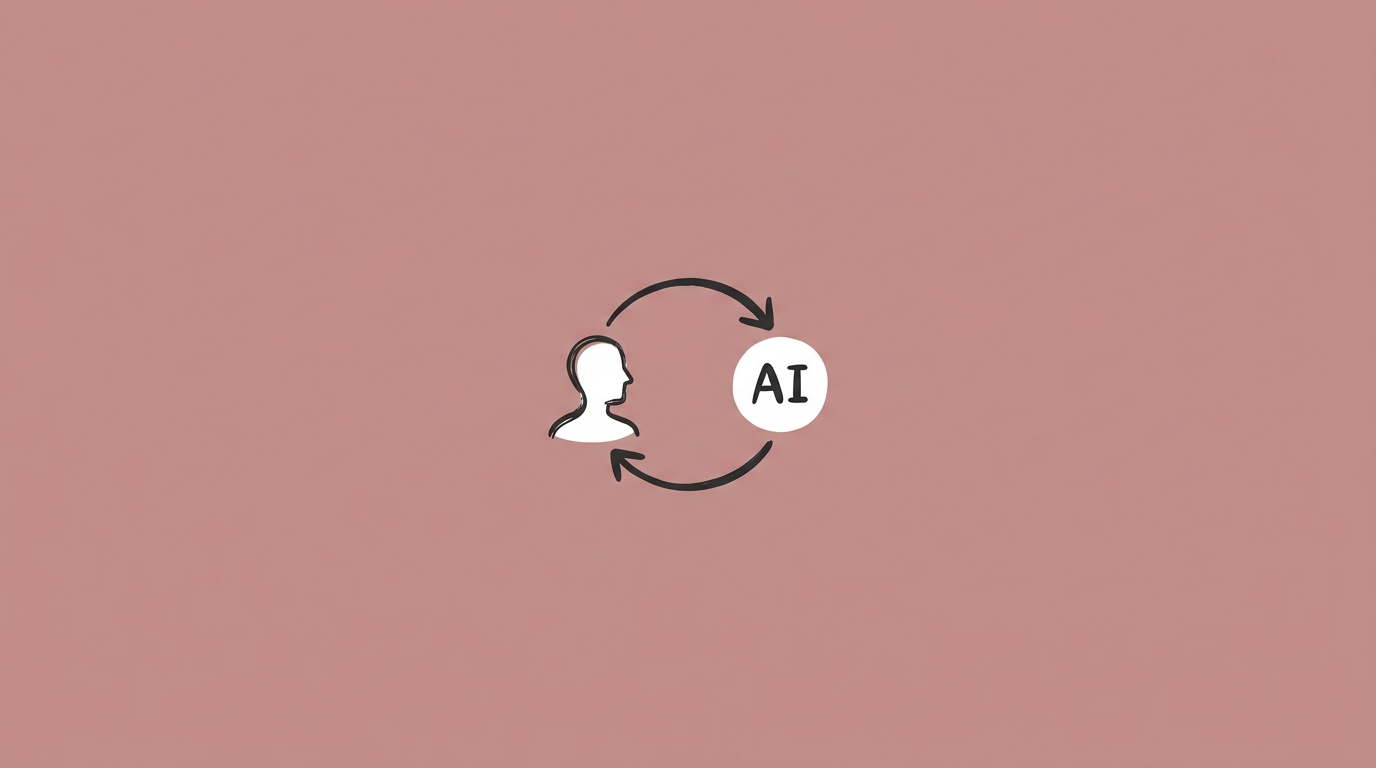
Human-in-the-loop is a design pattern where human judgment is built into specific decision points of an AI system. The AI handles high-volume, repetitive tasks while humans review outputs at points where mistakes have consequences. It is not a fallback or afterthought. It is the architecture.
Why can't AI systems run fully autonomously?
AI systems make confident mistakes. Unlike humans who pause when uncertain, AI produces incorrect output with the same formatting and certainty as correct output. The 5% error rate that looks like a rounding error in a demo becomes real damage in production: wrong customer responses, inaccurate content, compliance violations.
Where should human review be placed in an AI workflow?
Human review belongs at points where mistakes have consequences: final content review before publishing, data validation when decisions depend on business context, and customer-facing outputs where errors affect real people. The system handles the routine. A person handles the exceptions.
Sources
- McKinsey & Company — The State of AI in 2025
- Stanford University HAI — AI Index Report 2025

Founder, Tech10
Doreid Haddad is the founder of Tech10. He has spent over a decade designing AI systems, marketing automation, and digital transformation strategies for global enterprise companies. His work focuses on building systems that actually work in production, not just in demos. Based in Rome.
Read more about Doreid