AI Quality Control in Manufacturing: Computer Vision That Ships
Computer vision for industrial quality control has the highest demo-to-production gap of any manufacturing AI category. The vendor demonstration runs on curated images and shows 95% accuracy. The production deployment six months later runs on real factory floor conditions and shows 70%. The difference isn't model quality. It's the training data, the operational drift, and the human-review path that demos skip and production lives with.
This article is the playbook for closing that gap. What CV quality control actually does, the technique stack, the data discipline that determines outcomes, and the operational patterns that let production deployments scale.
What's actually happening at the camera
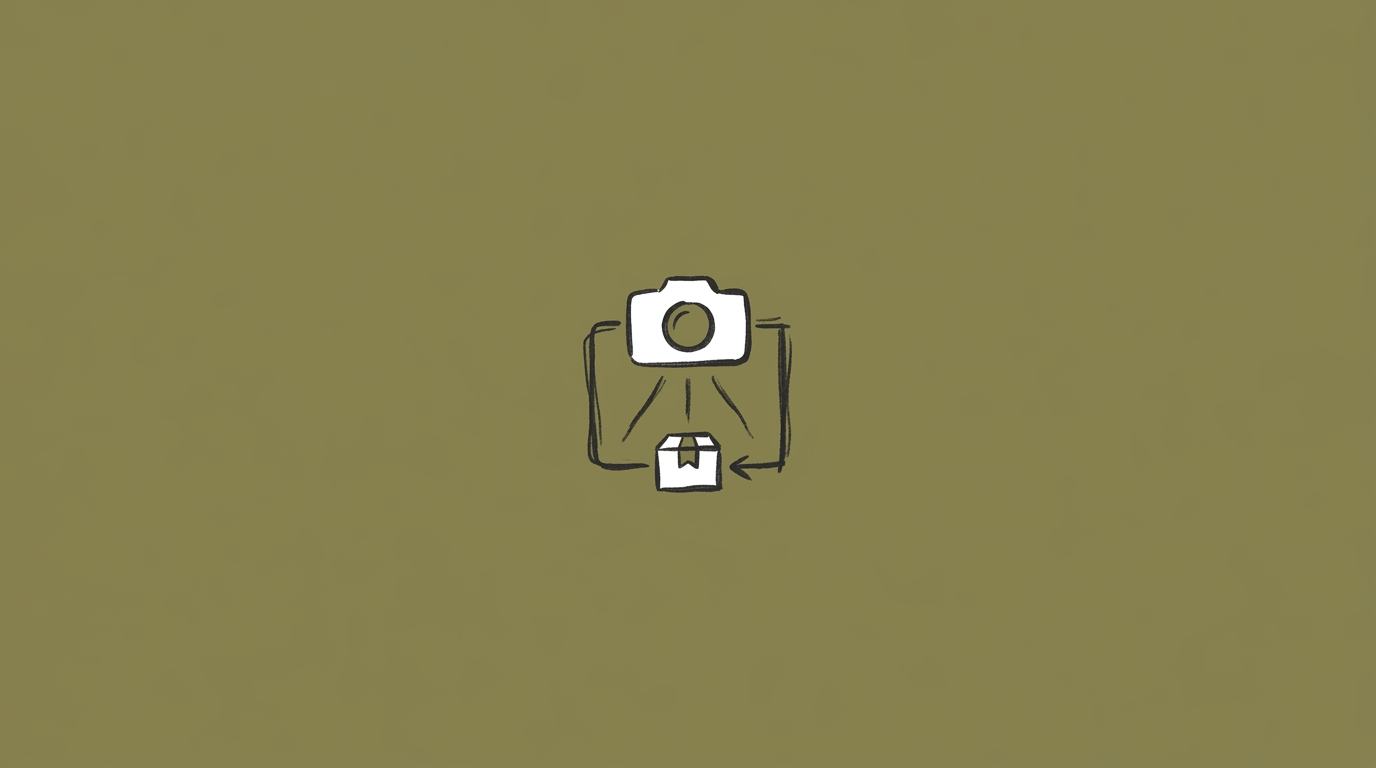
A typical industrial CV quality control deployment has cameras at production stations capturing images of products as they move past. The images feed a model that classifies pass/fail or detects specific defect types. Pass cases continue down the line. Fail cases divert to a reject station or human review queue.
Underneath, three CV techniques cover most production needs:
Classification. Whole-image pass/fail decision. "Is this product defective, yes or no." Simplest case, fastest to deploy, requires the least training data per category.
Object detection. Locating and classifying specific defects within an image. "There's a scratch at coordinates (340, 220) covering 4mm." Useful when defects need to be flagged and located for downstream processes (rework instructions, supplier notification).
Segmentation. Pixel-level identification of defect regions. "These specific pixels are corroded." Most expensive computationally, most useful when defect area matters for grading (premium vs second-quality).
Most production deployments use classification or object detection. Segmentation earns its seat for high-value products where defect grading affects pricing or routing.
The model stack
Modern industrial CV is mostly convolutional neural networks fine-tuned from pretrained backbones (ResNet, EfficientNet, ConvNeXt, or YOLO variants for detection). Transfer learning from ImageNet-trained backbones plus factory-specific fine-tuning gets you to working accuracy with thousands of labeled images rather than millions.
Vision-language models (CLIP-derived approaches, vision-language transformers) increasingly show up for harder semantic tasks where defect descriptions can be specified in natural language rather than fixed categories. Useful when defect taxonomies evolve frequently.
The vendor stack:
Cognex. Long-established machine vision, strong on standard inspection tasks (presence/absence, dimensional checks, OCR/OCV for label verification). Well-understood deployment patterns.
Keyence. Japanese industrial vision, similar capability profile to Cognex, often picked for newer installations.
Landing AI. Andrew Ng's company, focused on data-centric AI for industrial vision. Useful for teams who want a platform that emphasizes labeled-data tooling.
Platform components inside larger industrial offerings. Siemens Industrial Edge, GE Digital Smart Factory, Rockwell Automation include CV modules. Useful when you're already on those platforms.
For most mid-market manufacturers, buying from an established vendor is the right call. Custom builds take 6-12 months and require ongoing data labeling capacity that most ops teams don't have.
The labeled data problem
The single biggest predictor of CV quality control success isn't the model. It's the labeled training data.
Models need thousands of labeled examples per defect type. Most factories don't keep visual records of historical defects in a way that's usable for training. Defect events were recorded as text logs ("scratch on side panel"); the actual images, if photographed at all, weren't tagged or stored systematically.
The first 3-6 months of any CV deployment are usually labeled data collection. Three approaches:
Live labeling during a learning period. Run the line normally, capture images at every station, have human inspectors label captured images during their existing inspection workflow. Slowest approach but produces highest-quality data because the labels reflect real production conditions.
Synthetic data augmentation. Apply data augmentation (rotation, color shifts, noise) to existing labeled images to expand the effective training set. Useful for defect types where you have a few good examples but not thousands.
Pretrained domain models. For common defect types (scratches, dents, surface contamination), pretrained models exist that need only modest fine-tuning. Less factory-specific work, faster deployment.
The combination usually works: pretrained models for the obvious defects, live labeling for the factory-specific ones, synthetic augmentation for rare-but-important defects.
Edge inference is the standard
Cloud-based CV inference for production lines doesn't fit most deployments. The latency budget is typically under 50 ms (so the line doesn't slow), the network bandwidth requirements for streaming high-resolution images are high, and connectivity reliability isn't guaranteed in industrial environments.
The standard pattern: edge devices at each inspection station running the inference locally. NVIDIA Jetson, Intel OpenVINO-equipped devices, or vendor-specific edge boxes. Models are quantized and optimized for the edge hardware. Cloud connectivity is used for model updates and reviewing flagged cases, not for inference itself.
This shape has implications for the model choice. Smaller, faster models (MobileNet, EfficientNet-Lite) often beat larger more accurate models because the accuracy-vs-latency trade favors edge constraints. The "best model on the benchmark" is rarely the right model for production lines.
The human-review path
No CV system runs at 100% accuracy. Deciding what happens to flagged cases is critical operational design.
Confident pass: the model is highly confident the product is good. Continues down the line.
Confident fail: the model is highly confident the product has a defect. Diverts to reject station or rework queue.
Borderline: the model's confidence is below a configured threshold. Diverts to human review station.
The threshold for "borderline" is the operational dial. Set too low (e.g., review only the lowest 1% of confidence scores), and the system passes too many marginal cases. Set too high (review the lowest 10%), and you swamp the review queue.
Most production deployments tune this threshold weekly during the first quarter, then monthly thereafter. The bottom 5% confidence cases reviewed daily plus a sample audit of confident decisions catches drift.
What to expect from a real deployment
A realistic timeline for a mid-market manufacturer deploying CV quality control on a single product line:
Month 1-2: Vendor selection, station setup, initial sensor and camera installation.
Month 3-6: Labeled data collection during a learning phase. Initial model training. Human-in-the-loop on every inspection during this period.
Month 7-9: Model deployment with conservative auto-pass thresholds. Most cases still flow through human review. Threshold tuning weekly.
Month 10-12: Confident-decision auto-pass scaled. Human review only for borderline cases. Audit and feedback loops in place.
Year 2+: Expansion to additional product lines and stations. Continuous improvement of the model on accumulating data.
Realistic ROI: 20-40% reduction in defect escape rate (defects reaching customers), 50-80% reduction in inspection labor hours on the affected line. The escape rate gain is the bigger win economically because the cost of defects reaching customers (returns, warranty, brand damage) is usually much larger than inspection labor.
Failure modes I see most often
Lighting drift. Production line lighting changes over months as bulbs age, ambient daylight shifts, or maintenance crews adjust fixtures. Models trained on launch-day lighting underperform after months. The fix: lighting standardization (controlled enclosures around inspection stations) or scheduled retraining as conditions drift.
Product distribution drift. New product variants ship that the model wasn't trained on. Confidence scores drop. Production team isn't notified. Auto-pass starts misbehaving. The fix: monitor confidence distribution over time and alert when it shifts.
Camera position drift. Cameras get bumped during cleaning or maintenance. Frame composition changes. Model accuracy drops on specific defect locations. The fix: rigid camera mounts, periodic calibration checks, monitoring of inspection-area boundaries.
Skipped human-review feedback. Inspectors override the model decision but the override doesn't go back into training data. The model never improves on its weaknesses. The fix: every override captured as training data with the inspector's reason.
The honest takeaway
Computer vision quality control in 2026 is a mature, deployable, high-ROI technology when treated as an operational program. The teams who succeed treat it as multi-year continuous improvement. The teams who treat it as a six-month software deployment are the ones who write the case studies about why their pilot didn't scale.
Match the model to the line constraints. Invest in labeled data discipline. Tune the human-review threshold weekly during launch. Catch drift early. The pattern that produces actual escape-rate reduction is operational, not algorithmic. The model is the smaller part of the work.
Frequently Asked Questions
Why does CV quality control work in demos but fail in production?
Demos use curated datasets with consistent lighting, fixed camera angles, and pre-classified defects. Production sees variable lighting, drifting camera positions over months, products outside the trained distribution, and edge cases nobody labeled. The gap between 95% demo accuracy and 70% production accuracy is mostly about training data coverage and operational discipline.
Should I buy a vision platform or build custom?
For standard inspection tasks (presence/absence, dimensional checks, common surface defects), buy from established vendors — Cognex, Keyence, Landing AI, or platform components inside Siemens or Rockwell. Build custom only when the defect types are unique to your product line and no off-the-shelf model handles them. Custom builds typically take 6-12 months and require continuous data labeling.
How much labeled training data do I need to deploy CV quality control?
Several thousand images per defect type at minimum. Many factories don't keep visual records of historical defects, so the first 3-6 months of any deployment are often data collection rather than model training. Modern foundation models reduce this need somewhat (transfer learning from pretrained backbones), but factory-specific defect types still require factory-specific labeled data.
Sources
- AlphaBOLD — AI Powered Predictive Maintenance in Manufacturing
- IBM Think — The Role of AI in Predictive Maintenance
- Stanford HAI — AI Index Report 2026
- Dassault Systèmes — Predictive Maintenance & AI for Operational Optimization
- NIST — AI Risk Management Framework
- McKinsey QuantumBlack — The state of AI in 2026

Founder, Tech10
Doreid Haddad is the founder of Tech10. He has spent over a decade designing AI systems, marketing automation, and digital transformation strategies for global enterprise companies. His work focuses on building systems that actually work in production, not just in demos. Based in Rome.
Read more about Doreid