AI Automation Agency vs In-House Team: The Honest Comparison
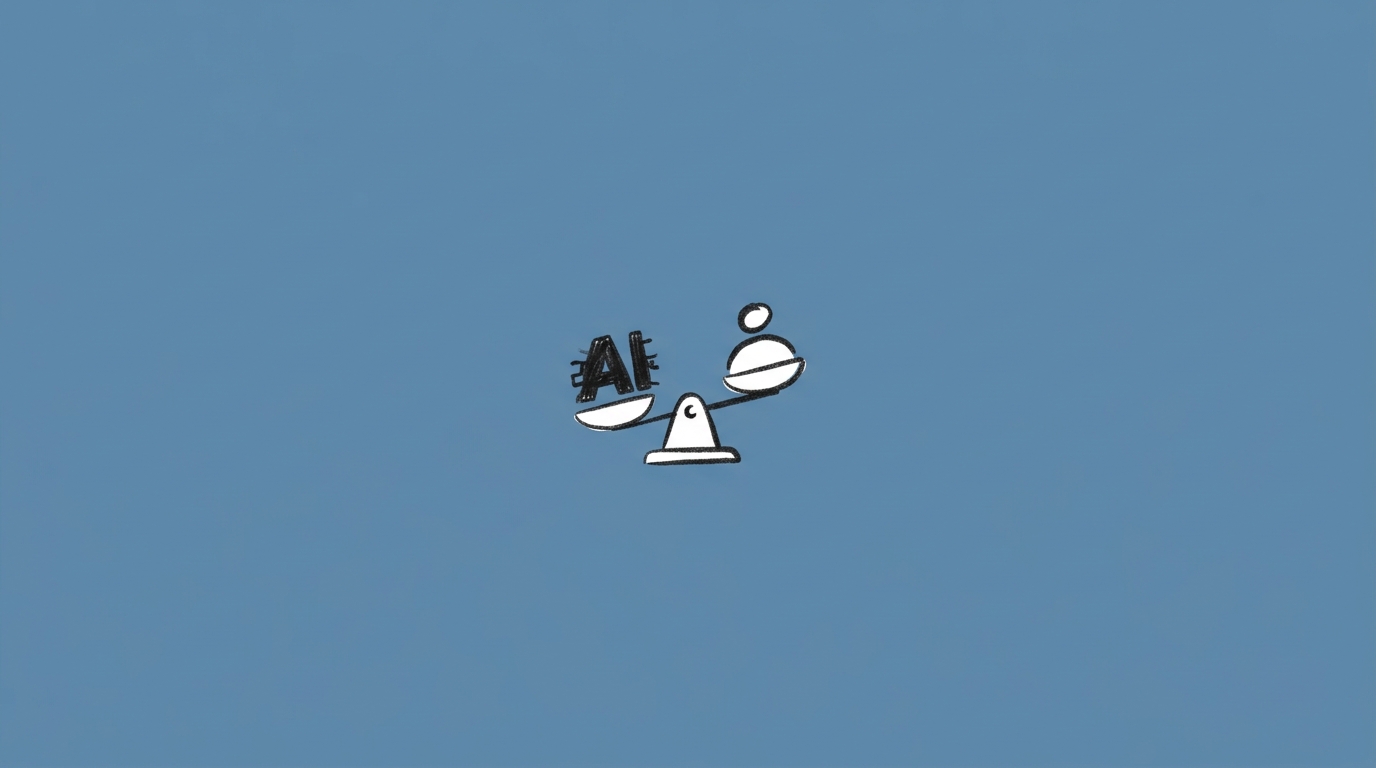
The agency vs in-house question for AI gets framed as a budget decision but is actually a strategic decision. The cost difference is real but predictable. The harder questions are about speed, depth, continuity, and what kind of capability you want to build inside your business. This article is the honest comparison with real numbers.
The cost reality
Per Autonoma's analysis and similar industry data, the working numbers in 2026:
AI automation agency retainer: $15K-$30K/month for ongoing work, or $180K-$360K/year. Project-based engagements run $40K-$120K for focused builds.
In-house AI team (2 people): $312K-$468K/year fully loaded. Senior AI engineer base $180K-$240K, junior $120K-$160K, plus 25-35% benefits and tools loading.
In-house AI team (4 people): $700K-$950K/year fully loaded. Pattern: senior + junior engineer + ML engineer + product manager.
Year one: agency wins on cost.
Year three: in-house wins on cost if utilization stays high (>70%) and the team is retained.
Below 50% utilization, in-house is always more expensive than agency on a per-output basis. Above 80% utilization, in-house is meaningfully cheaper.
The speed reality
Agency time-to-deploy: 2-8 weeks for a working build, depending on scope. The agency has done this before; their team is staffed; their tooling is mature.
In-house time-to-deploy from scratch: 6-9 months for the first deployment. Hiring (3-4 months), onboarding (2 months), first-build cycle (3 months). Subsequent deployments are faster, but the first is slow.
In-house time-to-deploy on existing team: 4-12 weeks, similar to agency, sometimes faster because of business context familiarity.
For first-deployment urgency, agency is dramatically faster. For ongoing build cadence with existing team, the gap closes.
The depth reality
Agency depth on AI craft: strong. Agencies see many use cases across many clients; the pattern recognition is broad and useful.
Agency depth on your business: weak to moderate. The agency learns your business during the engagement; that knowledge partially leaves with engagement turnover.
In-house depth on AI craft: moderate. Internal teams see fewer use cases per year than agencies; they go deep on yours but miss the breadth.
In-house depth on your business: strong. Internal teams compound business context over time. Year-three internal teams know things about your business that no agency can match.
The pattern: agencies bring AI craft, in-house brings business context. The best outputs come from teams that have both.
The continuity reality
Agency continuity: structural challenge. Agency consultants rotate between clients. The team that built your system in month 1 may not be the team supporting it in month 18. Agency turnover is also higher than enterprise turnover.
Per The Conference Board's research, "agency teams change, which is harder to control than internal change." This is a real tradeoff, not a marketing line.
In-house continuity: stronger but not guaranteed. Internal AI engineers also leave, especially at growth-stage companies competing for senior AI talent. But the institutional knowledge stays in documentation, code, and the surrounding team in a way that doesn't survive when an external agency rotates off.
The risk reality
Agency risk: vendor lock-in for the systems they built. If you stop the retainer, the system breaks down because nobody internally understands it. Mitigation: insist on documentation as a deliverable, run regular knowledge transfer sessions, and keep the agency's role bounded.
In-house risk: key person risk. If your senior AI engineer leaves and the rest of the team can't pick up, the systems they built can become unmaintainable. Mitigation: pair programming, code review, documentation discipline, hiring for redundancy.
What good agency engagements look like
Agencies earn their seat when:
- Time to first deployment matters (you need something working in 4-8 weeks, not 6-9 months)
- The use case is bounded (one feature, one workflow, one integration)
- Your AI roadmap is uncertain enough that hiring full-time risks over-staffing
- You don't yet know whether AI capability is core to your competitive moat
- Your senior engineering leadership is overloaded and can't manage AI hiring
A good agency engagement structure: focused 8-12 week build with clearly defined deliverables, optional 6-month retainer for refinement and incident response, explicit knowledge transfer milestones, documented exit criteria.
What good in-house teams look like
In-house earns its seat when:
- AI is becoming core to your product or operations
- The cadence of new AI deployments is high (multiple per quarter)
- The cost of vendor lock-in or knowledge loss is unacceptable
- You can offer compensation competitive with senior AI talent (>$200K base for senior)
- Your engineering culture supports the discipline AI engineering requires (eval, observability, iteration)
A good in-house structure: senior AI engineer + ML engineer + product manager as the core team, with software engineers from your existing org joining as project work demands. Build on established AI platforms (Anthropic, OpenAI, AWS Bedrock, Vertex AI) rather than from scratch.
The hybrid model most growth-stage companies use
Pure agency or pure in-house is increasingly rare at growth-stage companies. The hybrid that works:
Agency for the first 1-3 deployments (years 0-1). Builds capability, ships fast, demonstrates value.
In-house hire alongside the agency (year 1). Senior AI engineer who learns from the agency engagements and starts building the internal team's capability.
Gradual transition (years 1-2). Agency role narrows from "build everything" to "build the hard things" and "support what's deployed." In-house team takes over standard builds.
Mostly in-house with focused agency support (year 2+). Internal team handles 80% of work; agency comes in for specialized projects or peak capacity.
This pattern compresses the cost-quality curve: faster than pure in-house, deeper than pure agency, with explicit transition rather than open-ended retainer.
When neither is the right answer
For very basic AI use cases — content drafting, simple chatbots, internal Q&A on documents — vendor APIs plus a thoughtful prompt library deliver the value without either agency or in-house team. The platform vendors (Anthropic, OpenAI, Google) plus a non-AI engineer who reads the docs is enough.
This is genuinely true for the long tail of low-stakes use cases. The mistake is using "we don't need an agency or in-house team" reasoning for use cases that actually require eval discipline, integration depth, or governance — where the absence of capability shows up as fragile systems and quiet failures.
The decision matrix
Pick agency-only when: short timeline, focused scope, uncertain AI roadmap, no senior AI hiring capacity, AI not core to moat.
Pick in-house-only when: AI is core to moat, cadence is high, vendor lock-in is unacceptable, can hire senior talent, established AI engineering culture.
Pick hybrid when: growth-stage, AI becoming important, want to build internal capability over time without slowing down current work. This is where most companies actually land.
Pick neither when: use cases are genuinely basic (drafting, simple Q&A) and vendor APIs plus a non-AI engineer can deliver. Be honest about which use cases actually qualify.
The honest takeaway
Agency wins year one on cost and speed. In-house wins year three on cost and depth. Hybrid is what most growth-stage companies actually run. The strategic decision is less about budget and more about how core AI is to your business and how fast you need to build internal capability.
Cost: agency $180K-$360K/year vs in-house $312K-$468K/year. Speed: agency 2-8 weeks vs in-house first build 6-9 months. Depth: agency on AI craft, in-house on business context. Continuity: in-house stronger structurally. Risk: agency lock-in vs in-house key person risk.
Pick on these dimensions, not on the vendor's pitch.
Frequently Asked Questions
What does an in-house AI team actually cost in 2026?
A two-person in-house AI team runs $312K-$468K/year fully loaded (salary, benefits, tools, infrastructure). An equivalent AI automation agency retainer runs $180K-$360K/year. Year-one math favors agency. Year-three math usually favors in-house if utilization stays high.
Can I really run AI without either an agency or in-house team?
For very basic use cases (simple chatbots, content drafting), yes. Vendor APIs plus a thoughtful prompt library can take you a long way. But for any AI that requires custom integration, eval discipline, or governance, you need either external expertise or internal capability. Doing without both produces fragile systems that break under change.
Sources
- The Conference Board — In-House vs. Outsourcing: AI-Driven Shifts in Marketing & Comms
- AWS — AI Agents vs. Automation: A Strategic Guide
- Harvard Business Review — AI Is Changing the Structure of Consulting Firms
- McKinsey QuantumBlack — The state of AI in 2026
- Stanford HAI — AI Index Report 2026

Founder, Tech10
Doreid Haddad is the founder of Tech10. He has spent over a decade designing AI systems, marketing automation, and digital transformation strategies for global enterprise companies. His work focuses on building systems that actually work in production, not just in demos. Based in Rome.
Read more about Doreid